
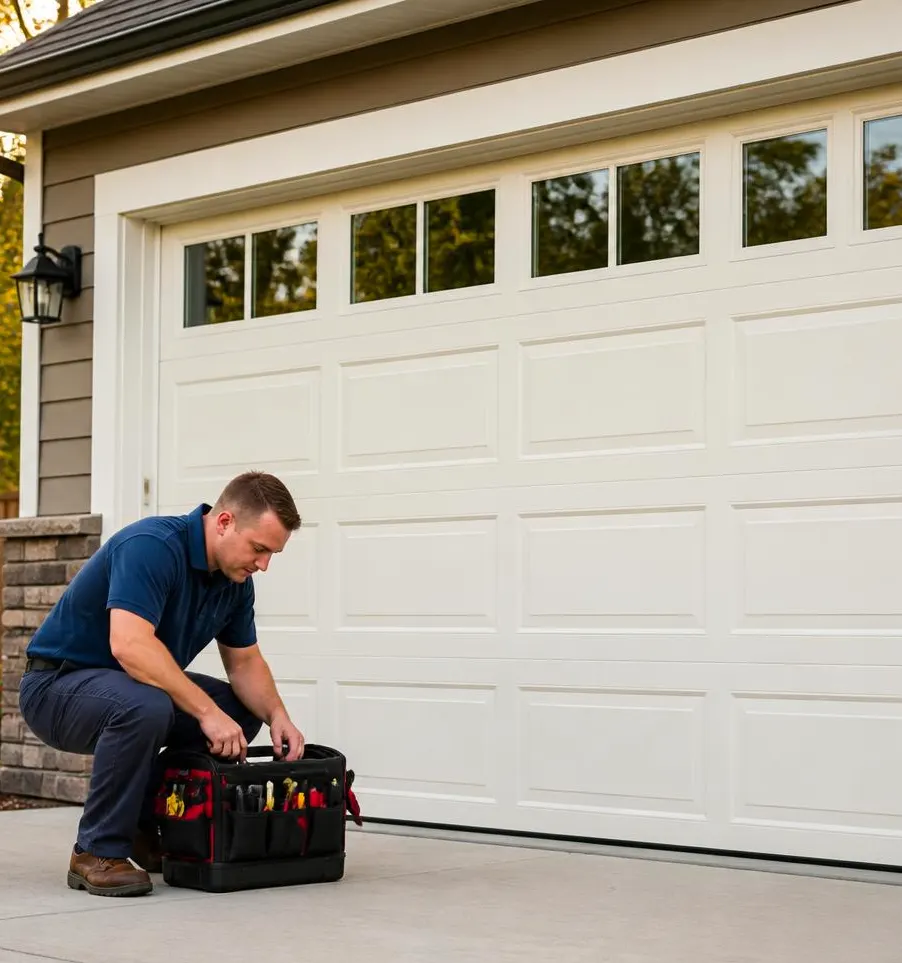
Getting Your Garage Door Ready for San Fernando Valley Winter Rains
A typical call this time of year starts the same way: the first good rain finally shows up, and suddenly a garage door that worked fine all summer is grinding, sticking halfway, or refusing to close evenly. Nine times out of ten, the problem isn't new. It's months of dry-season dust and wildfire haze that settled into the tracks and rollers, sitting there waiting for moisture to turn it into a gritty paste. Add in weatherstripping that baked and cracked under summer heat, and you've got a door that's not ready for the wet months ahead. The good news is most of this is predictable and preventable if you look at a few specific things before the rain really sets in.
Clear Out Summer Dust Before It Turns to Grime
After a long dry season, the tracks, rollers, and hinges on most doors around San Fernando, Sun Valley, and Pacoima are carrying a fine layer of dust and ash buildup that isn't obvious until water gets into it. Once rain starts, that dust mixes with any lubricant residue and forms a paste that binds up rollers and makes the door labor on its way up.
- Wipe down the tracks with a dry cloth or shop vac before doing anything else — don't hose them out, since trapped water causes its own problems.
- Check rollers for a gritty coating; if they're nylon or steel and spinning roughly, they need cleaning, not just lubricant.
- Use a garage-door-specific lithium or silicone lubricant on hinges, rollers, and the top of the track — avoid WD-40 as a long-term lubricant, since it attracts dust rather than repelling it.
Check the Weatherstripping and Bottom Seal
Months of direct sun and heat are hard on rubber. By fall, it's common to find the bottom seal cracked, flattened, or pulling away from the door entirely, and the same goes for the vinyl stripping along the side tracks. Once winter rain starts, a failed seal means water, wind-driven debris, and cold air all getting into the garage instead of staying outside.
- Run a hand along the bottom seal — if it's stiff, cracked, or no longer makes full contact with the slab, it should be replaced before the rainy stretch.
- Look at the corners first; that's usually where seals fail earliest from UV exposure.
- If you store anything on cardboard or in cloth bins near the garage door, raise it off the floor — a compromised seal plus a hard rain is a fast way to ruin stored items.
Inspect Springs Before Cold Mornings Add Strain
Torsion and extension springs work harder when temperatures swing between cool, damp mornings and warmer afternoons, which is exactly the pattern once winter rain starts moving through the Valley. A spring that's already worn from a hot summer of daily cycles is more likely to show stress — or fail outright — once that temperature variation kicks in.
- Watch for a door that feels heavier than usual when opened manually, or an opener that strains and makes a louder motor sound than normal.
- Look for visible gaps in the spring coils or any rust starting to form, which rain and humidity will accelerate.
- Do not attempt to adjust or replace springs yourself — they're under heavy tension and this is one job where a professional technician with the right bars and clamps is worth the cost.
Test the Opener, Sensors, and Battery Backup
Shorter days mean the opener gets used more in low light, and dust from the dry season often settles right on the safety sensor lenses near the floor. A dirty sensor can cause the door to reverse randomly or refuse to close at all — a problem that gets worse, not better, once rain and mud start splashing nearby.
- Wipe both sensor lenses with a soft, dry cloth and make sure they're aligned — a blinking light on one sensor usually means alignment, not a wiring fault.
- Test the auto-reverse safety feature by placing a block of wood in the door's path and confirming it reverses on contact.
- If your opener has battery backup, check that it's holding a charge — storm-related power outages are more likely once the rainy season arrives, and a dead backup battery means a stuck door at the worst time.
Give the Panels and Hardware a Once-Over
Wood garage doors that have dried out over a hot summer can swell once they start absorbing moisture again, which sometimes shows up as a door that binds at the top corners. Steel doors, especially older ones, can develop rust at seams or around hardware if water sits in a scratch or chip in the paint. If your home has had an earthquake retrofit that involved reinforcing the garage opening, it's also worth confirming the door still tracks and seals evenly — retrofit work can occasionally shift alignment slightly, and a door that's fought with the track all summer may show it once it's working harder in wet weather.
- Touch up any exposed metal with a rust-inhibiting primer before the rain gets to it.
- Check that all mounting bolts and hinges are snug — vibration from daily use loosens hardware gradually, and a loose panel is more likely to rattle or leak once wind-driven rain picks up.
When to Call San Fernando Garage Door
If you're hearing grinding in the tracks, noticing a door that's suddenly heavier to lift, or dealing with sensors that won't stay aligned, that's the point to call in a technician rather than keep adjusting things yourself. San Fernando Garage Door handles garage door maintenance tune-ups that cover track cleaning, lubrication, and hardware checks in one visit, and we also handle spring replacement safely when a spring is showing wear before it fails during a storm. Catching these issues now is a lot less disruptive than dealing with a door that won't open during a heavy winter rain.
If your garage door is showing any of these signs, call San Fernando Garage Door today to get it checked and ready before the rain rolls into San Fernando, CA.