
You pull into the driveway, hit the remote, and instead of the smooth hum you're used to, the door groans and squeals its way up the track. Maybe it even hesitates halfway. If you've lived through a San Fernando Valley summer and fall, you already know the culprit: months of dry heat, dust, and the occasional haze of wildfire smoke settle into every moving part of your garage door, drying out old lubricant and grinding away at metal-on-metal contact points.
The good news is that this is one of the easiest and cheapest fixes a homeowner can do. The bad news is that most people either skip it entirely or reach for the wrong product, which can make the grinding worse instead of better.
Tools You'll Need
- A garage-door-specific lithium or silicone-based lubricant (not household oil or WD-40)
- Clean, dry rags
- A soft brush or old toothbrush
- A step stool or short ladder
- Safety glasses
Step-by-Step: How to Lubricate Your Garage Door
- Disconnect the opener and close the door manually. Pull the emergency release cord so the door is under your control, not the motor's, and work with it fully closed so you can reach every part safely.
- Wipe down the tracks first, but don't lubricate them. Use a dry rag to clear out dust, cobwebs, and grit that builds up fast during dry season. The tracks should stay clean and dry; lubricant on the tracks attracts more dust and creates a gummy residue that actually makes the rollers stick.
- Lubricate the hinges. Apply a small amount of lubricant to each hinge where the door panels fold, working it into the pivot point rather than spraying it broadly.
- Lubricate the rollers. If you have metal rollers, apply lubricant to the bearings at the center, not the wheel surface itself. If your rollers are nylon (the quieter, more common type in newer installations), skip the wheel and just hit the metal stem and bearing.
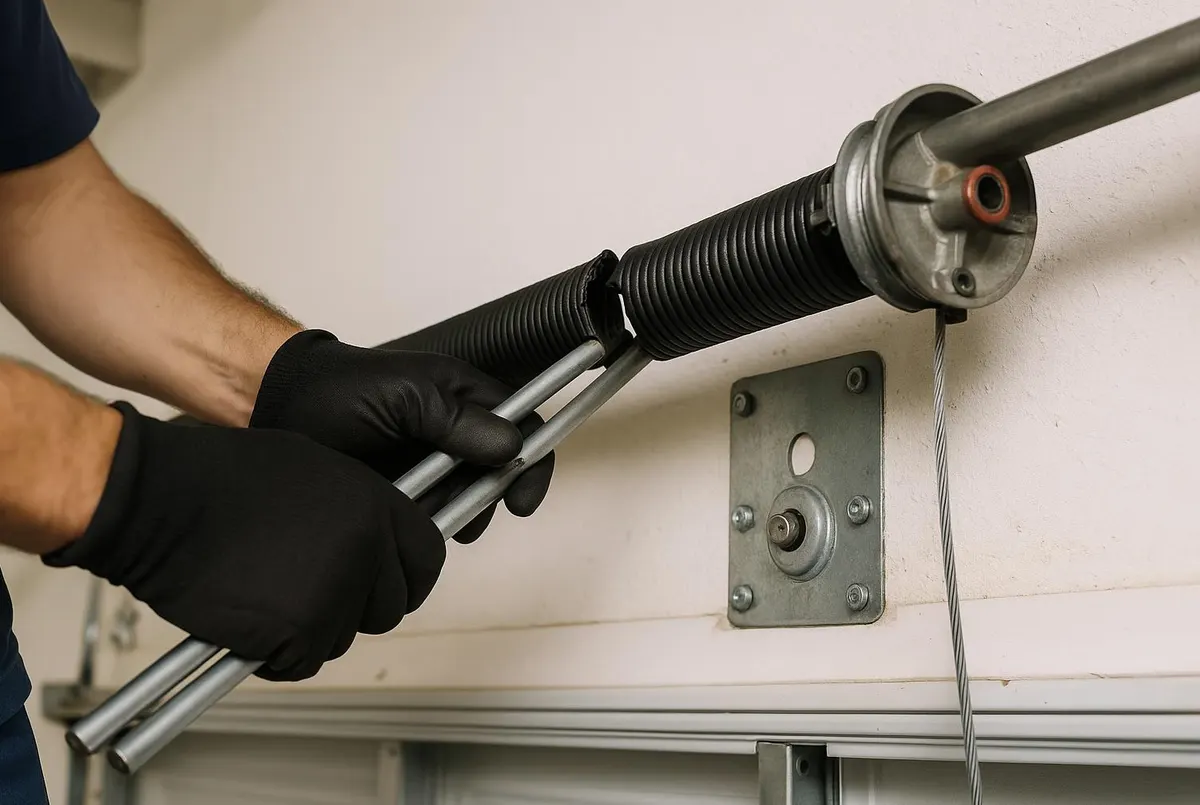
- Apply a light coat to the torsion spring. A thin layer of lubricant along the spring coils reduces friction and rust, which matters more here than you'd think given winter rain exposure. This is light surface lubrication only, not adjustment.
- Lubricate the opener's chain or screw drive. A few drops along the rail where the chain or screw moves keeps the motor from straining.
- Wipe off excess lubricant everywhere. Any drips left behind just become a magnet for dust and debris, which defeats the purpose.
- Reconnect the opener and run the door through a few full cycles. Listen for the noise you started with. It should be noticeably quieter and smoother.
Products to Use and Products to Avoid
Stick with lubricants labeled specifically for garage doors, typically a white lithium grease or a silicone-based spray formulated to resist dust pickup. These are built to stay put through temperature swings and dry conditions without turning gummy.
Avoid WD-40 for this job. It's a solvent and light degreaser, not a lubricant, and it evaporates quickly, leaving parts drier than before within a few weeks. Also skip thick automotive grease or general-purpose oil; both attract dust and dirt, which in a dry, dusty environment like the Valley turns into a gritty paste that accelerates wear instead of preventing it.
What a Homeowner Can Handle vs. What Needs a Technician
Cleaning and lubricating hinges, rollers, and the opener rail is safe, straightforward homeowner maintenance. Where you should stop is anything involving spring tension, cable alignment, or a door that's visibly off-track. Torsion springs are under heavy load, and adjusting or replacing one without the right tools can cause serious injury. If the noise persists after lubrication, if you notice a gap or stretch in the spring coils, or if the door jerks unevenly as it moves, that's a sign of a mechanical issue lubrication won't solve.
When to Call San Fernando Garage Door
If you've gone through these steps and the door still grinds, sags, or feels heavier to lift by hand, it's time to call in a technician. We offer full garage door maintenance visits that cover spring tension checks, track alignment, and hardware inspection, plus spring replacement when coils are worn, rusted, or stretched beyond safe use. Catching these issues early is a lot cheaper than dealing with a door that fails completely.
If your garage door in San Fernando, CA, is still noisy after a proper lubrication job, give San Fernando Garage Door a call and we'll get it running quietly again.